TRAILER
58 SECONDS · SEVEN SILENT IN-ENGINE PLATES · PURPOSE-COMPOSED SCORE
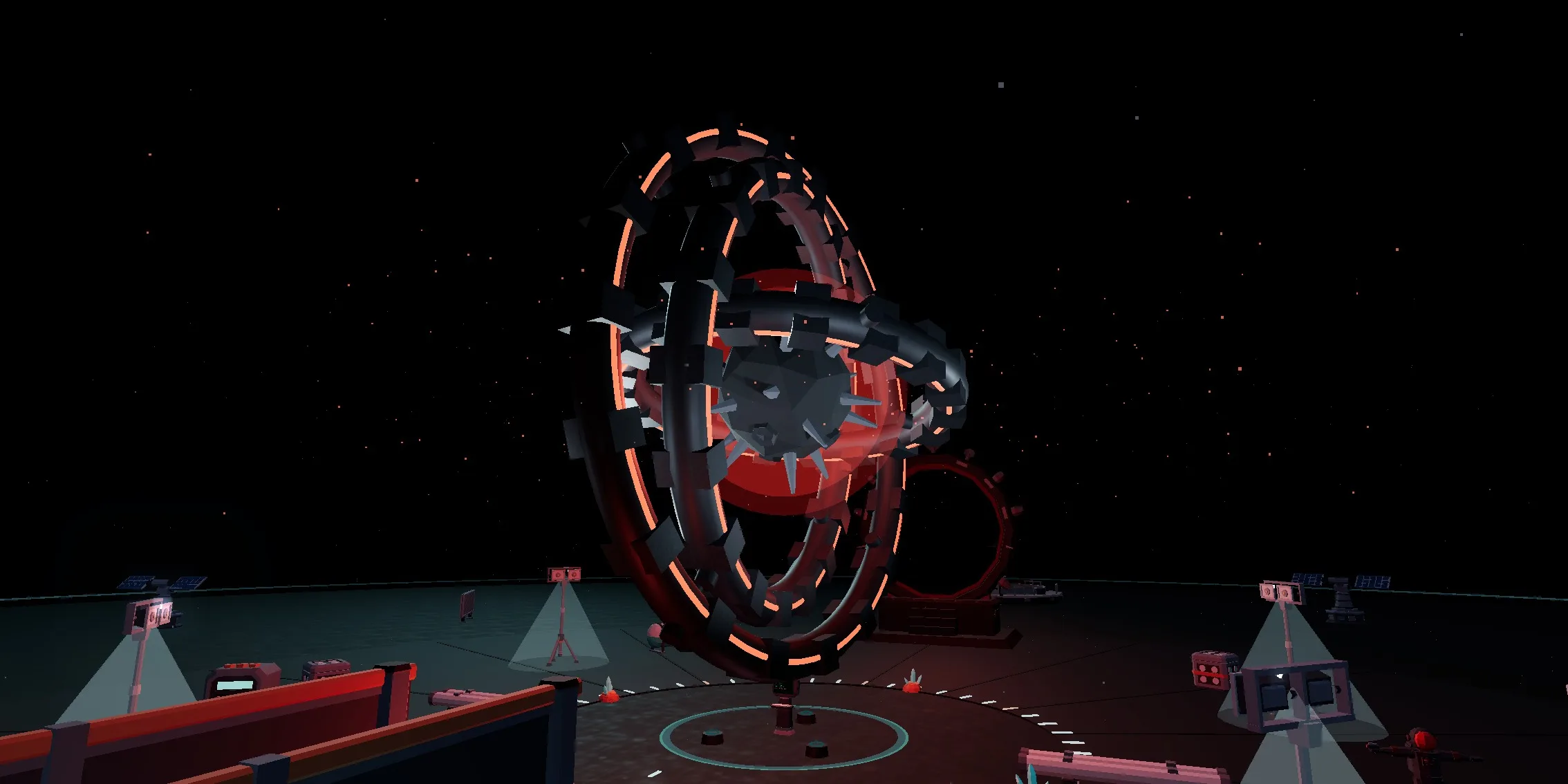
You are Ryn Castellan, a salvage technician aboard the tug Magpie. Seven years ago the research vessel Meridian disappeared in the middle of a test of the Aperture, which is a fold drive that does not travel to a place so much as travel through something. Last week she reappeared at the edge of charted space. She is intact, she is cold, and she has been broadcasting one repeating hail ever since.
Salvage law is unsentimental about this sort of thing. The first crew to board a derelict owns her, and a full share of a research vessel is a great deal of money to a technician who is carrying a great deal of debt. That is the reason Ryn gives for going in, and she gives it in the first line of the game, before anyone has had a chance to ask her.
You board. You find the flight log. One entry in it is flagged, seven years old, and locked by the Meridian’s own captain. It reads “Do not answer the hail. Do not play the crossing.” The prompt underneath it reads PLAY, and there is nothing else aboard the ship left to try. The game waits for as long as you like. It is not going to offer you anything else.
Everything else in the game follows from that one paragraph. It is why the ship is still lit after seven years, why the crew are still walking their rounds, why the drive has never stopped turning, and why the only way out of the story involves standing still in the most dangerous room on the vessel and finishing a sentence.
Six entries, and none of them is spoiled here. The crew page gives each one an open upper half and a shutter over everything that would cost you a discovery.
The player. She is never seen; the only part of her that exists on screen is the cutter held low and to the right. She is aboard because she owes money, and she says so plainly.
She stays with the tug and never boards. For the whole of the game she is a voice on your channel, and for most of it she is the only company you have.
He boards with you and splits off for the reactor deck almost immediately. Twenty minutes, he says, and keep your channel open. He leaves a trail of weld-marks going west.
Half of him is still on the crew’s side. His visor is the whole of the ally system: teal means he is himself and will help you, and red means somebody else is using him as a speaker.
Still sealed in their suits, visors dark, the suit glow burning a red that no manual lists. They do not hunt. They maintain. They walk fixed routes and tend consoles that have been dead for seven years.
It has no body and it is never shown. You know it is near because gravity leans, the camera rolls, and the dust in the bay begins falling upward.
Every spoken line in the game has a generated take, and the takes are already deployed alongside the game, so the wiki can simply play them. These three are the opening of the story, in order, and none of them gives anything away.
The full cast, the three score cues and the way the ship makes its own noise are on the soundtrack page.
The sibling wiki was able to hand you the tape, because in that game the tape was a file. Here it is not. The crossing is built live in the browser every time it plays: a glottal pulse train shaped by three formant filters, band-limited into a comms band, with hiss, wow and flutter, seven dropouts, and an arc across which the pitch falls from a hundred and thirty-two hertz to thirty-eight while the syllables open out from clipped telemetry chatter into something with a cadence. It exists only while the game is running, and it dies with the ship’s power, on purpose.
It has now been captured once, by tapping the synthesis bus while the game ran, which makes it the only asset on this site that did not exist before the site did. Hearing it here is not the same as having it played at you by a ship that has been waiting seven years for somebody to ask, so the other place to hear it is still in the game.
The game opens on an orbit camera looking at the drive, which is not the game. Press F and you board her, and everything below applies from that moment on.
| F | Board the ship, or leave the deck and go back to the orbit camera. Escape also leaves. |
|---|---|
| W A S D | Walk. Hold shift to run. |
| MOUSE | Look. The game asks for pointer lock and falls back gracefully if it is refused. |
| LEFT BUTTON | Fire the salvage cutter. It has ten cells, which drain in about four and a half seconds of held beam and refill after a second and a half of rest. |
| E | Use whatever the prompt is currently offering. |
| SPACE | Skip the cutscene you are watching. On the orbit camera it winds the drive up and down instead. |
| M | Toggle the ship’s sound. |
| R | Wipe the save and start again from the docking ring. It works during play, not only from an end card. |
On a touch device the game rearranges itself without being asked. A thumb stick in the lower left walks, a drag anywhere else on the screen looks around, and three pills along the bottom cover USE, CUT and RUN. Tapping the world boards the ship, and tapping it again skips a cutscene.
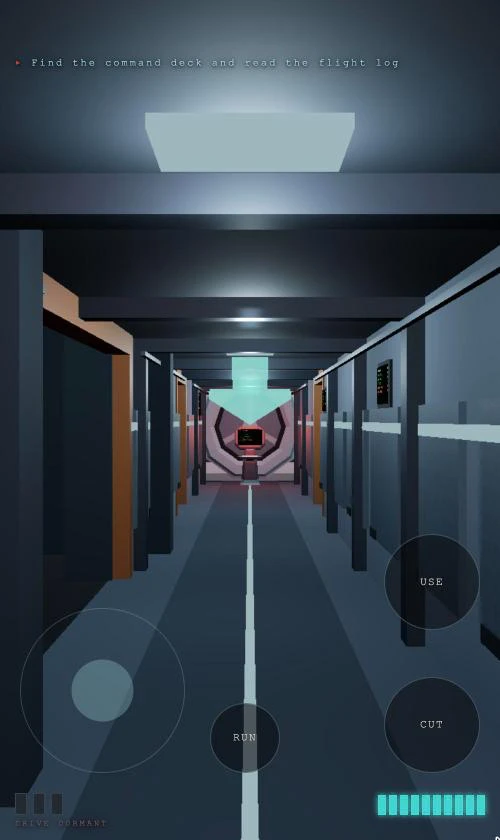
The game saves itself at every story beat, so closing the tab
costs you nothing. One URL parameter is worth knowing about if you are
taking pictures rather than playing: ?ship=a builds only the
spine and the command centre, which gives the cleanest corridor in the game.